For those reading who are not an elder millennial, Blizzcon 2026 felt like a tidal wave of content targeted specifically at us. An expansion for Warcraft 3, twenty four years after its original release date. New Starcraft content in 2030 with an amazing trailer that shows Blizzard still rules with cinematic storytelling. Diablo 5 in 2029, new World of Warcraft reveals, and, well, what we are all here to talk about: World of Warcraft: Forever.
And oh boy, while the reveal of Forever was already an explosive announcement with Blizzard trying to thread the needle between nostalgia and new game design, the reaction online ever since has been a nonstop inferno of content. Some people are raving about how ‘we are so back’ and how Blizzard is finally listening to the fans again. Some content creators putting out rapid fire videos talking about how Forever is going to be the best version of World of Warcraft yet while also already making tier lists about ‘which classes now suck’, often within the same week.
What fascinated me the most however were deeper dives that Blizzard put out during Blizzcon, and notably, the reactions they were receiving as they talked. There was an entire thirty-three minute presentation on how they updated fog and lighting in Duskwood (and it was glorious). There were panels on how game developers were trying to add new content while also promising to never raise the level cap or leave Azeroth, about creative choices to add a new group of elves while also trying to preserve what it felt like to game in 2004. My head was spinning as I tried to keep up with all the promises and aspirations being laid down.
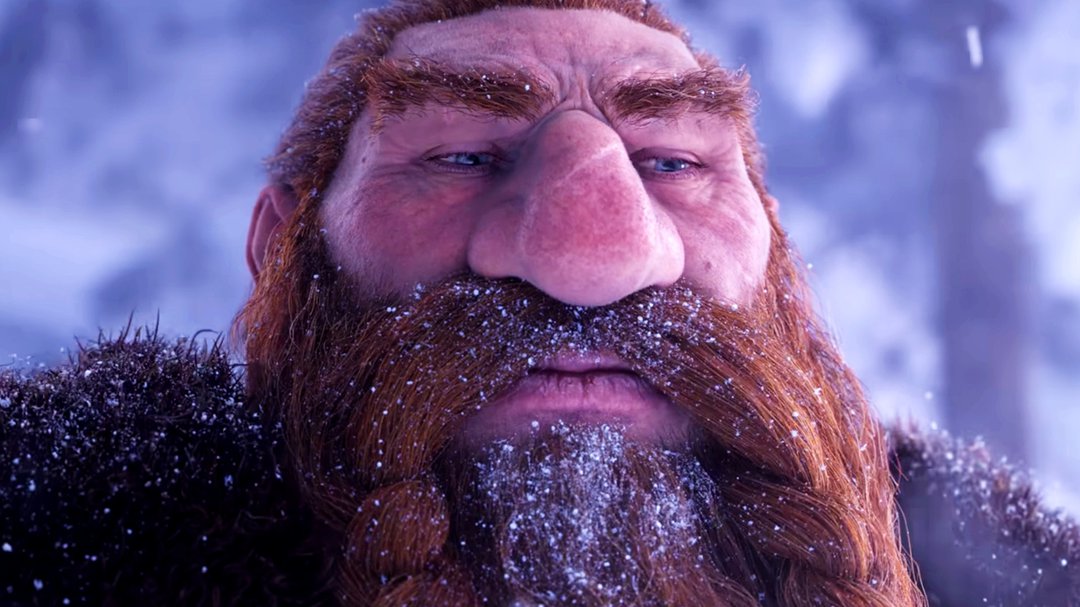
Seeing this dwarf in a new cinematic nearly 23 years late was surreal.
Most striking to me however was when game dev Kris Zierhut was on stage, excitedly listing off how they were slowing down the pace of levelling, how they were making the journey matter more than the destination. Then, proudly, he mentioned how basic enemies might take fifteen seconds to beat at a time.
I thought about how saying that out loud in 2006 could have gotten you flamed for weeks as being out of touch with players. Now in 2026? It was getting applause, even cheers. What’s happened? What’s changed? Has there been some fundamental change in what people are looking for in games in the last 20+ years of World Of Warcraft’s existence?
It’s what compelled me to write this opinion piece. I wanted to collect my thoughts as I get ready to dive back into a world I joined as a college student, and now want to return to as a dad. World of Warcraft is fascinating just because it’s survived for so long and has endured so many changes. Can we return to a simpler time? What does it mean that many people who play games now cheer for a reset to older game mechanics? I’m excited to play the game starting November 4th, but can I really return to the past glories and sleepless nights I remember?
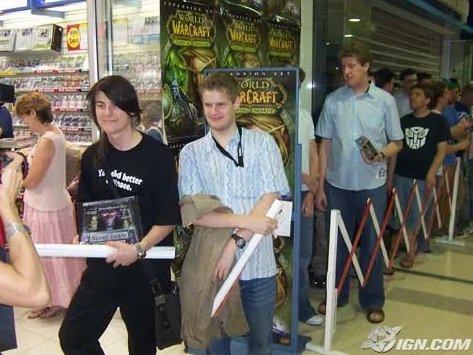
An image I found online of The Burning Crusade expansion's midnight release in Australia, from IGN. I waited online somewhere in the Smithhaven Mall on Long Island.
Editor’s Note and personal WoW backstory: I’m about to date myself in the timeline and the following sections of this opinion feature. It’s a bit of a self callout, as there are many people who might read this and decide to call me a tourist because I haven’t been active in the scene. Heck, there might also be some people who call me a chud because yes, I do believe there was a ‘golden age’ of WoW, just maybe not for the reasons others think.
Feel free to read along, agree, disagree, or comment about your own time in the game; I would love to hear stories of other players journeys with WoW and where they ended up!
A quick summary of World Of Warcraft’s Timeline, colored from my own perspective:
- 2001-2003: It’s announced World of Warcraft is being made as a follow up to Warcraft 3. Me and many others seem confused why our favorite RTS creator is making an MMO, but are curious.
- November 2004: World of Warcraft is released. I have enough hype and love midnight releases as a 19 year old with no responsibilities, so I get it so I can walk around Azeroth. By the end of the month I’m suddenly running a Roleplaying Guild of grumpy dwarves and gnomes called The Boomstick Gang and having the time of my life with friends all over the world.
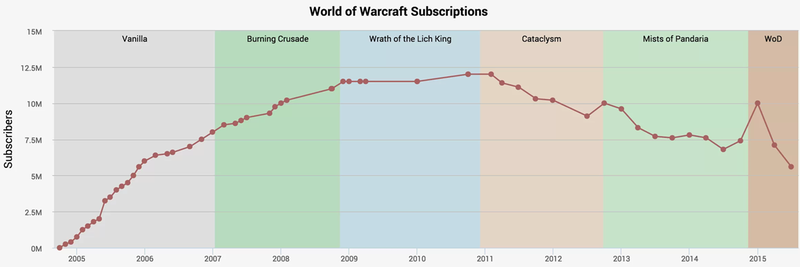
- 2005-2006: Vanilla WoW thrives. I walk around my dorm and have people shouting down at each other to group up for raids. WoW has gone from being seen as a ‘beginner MMORPG’ to dominating the market with 5 million, then 7 million subscribers. I spend a lot of time on the Feathermoon server and Boomstick Gang personal forums talking about the game or doing play-by-post stories. There’s a thriving RP community with Alliance and Horde players having ‘vendettas’, thieves guilds, all of it.
- January 2007: The Burning Crusade, the first expansion, releases to thunderous applause. Subscribers hit over 10 million. I have friends who become die hard raiders, and I start finding I’m not capable/willing to keep up with the end game scene. I take short breaks as needed during college for finals, as more and more focus is on end game content.
- November 2008: Wrath of the Lich King releases at midnight. I stay up until 6 am with a friend to hit level 71 and beat the Borean Tundra zone to enjoy a good old fashioned gaming marathon. The game hits over 12 million monthly subscribers, its peak known number. I love my silly little Boomstick Gang guild of friends and roleplayers, and end up meeting up with some in person. I am feeling locked out of the end game entirely and stop trying to keep up as I’m graduating college. Yes, I’m a weirdo who felt like using add-ons was cheating and wanted to enjoy the game as-is.
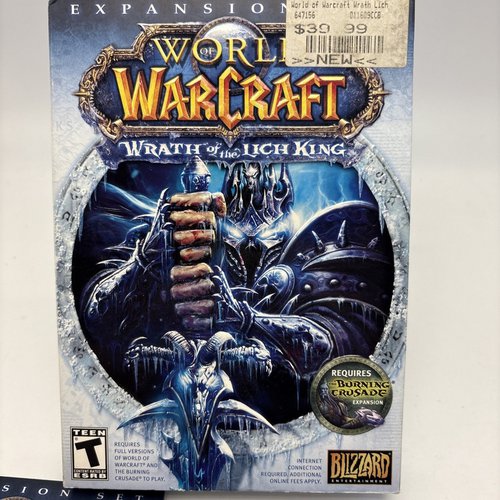
- December 2010: Cataclysm comes out, destroying the original map and reframing it for new content. There’s lots of hype, but when the game releases, thoughts are mixed as to what was changed. Conversations online feel like they are more about what Blizzard is doing wrong than right. Everything feels like a race for world first. Old roleplaying guilds have gone quiet or converted to raiding, and many friends from The Boomstick Gang log in every so often but not more than that. I call it quits a few months later.
- September 2012: Mists of Pandaria is released. Subscriber count had dipped under 10 million by the end of Cataclysm, and there is some bounce back for a few months above that, but by now, speed running content is the name of the game. Subscribers quickly fall back under 10 million and cascade down to 7 million by its end. I hear good things about the story, but also hear how ‘you can beat the game in a month’, and I just see people complaining online rather than be excited. I stay away.
- November 2013: Warlords of Draenor is released. The plot by this point has turned into time travel in what feels to me as a strange way to lean into nostalgia for older plot lines. Everything I’m hearing is either people complaining about the game or how to beat the toughest raids. I don’t have any interest in returning anymore as I’ve moved on.
- August 2019: World of Warcraft: Classic releases. This is the closest I’ve gotten in years to actually wanting to buy into the game again. However, a mixture of a new job, personal life, and now running this website makes me decide against it. I really enjoy Dan Olson’s amazing essays on how much gaming culture has changed since 2004, and decide, sadly, I don’t think I can go home again.
- September 2026: World of Warcraft: Forever is announced, alongside many “40 year old gamer bait” announcements like a new Starcraft title. I start digging into why this game is different than WoW: Classic, and feel myself get swept up into nostalgia and wanting to go back to Azeroth. I’m now a Dad, but so are many people I played the original game with. We’ve pined for ‘the good old days’ enough in the last decade. We start making plans to make a guild.
Long story short: I think this absolutely amazing Carbot Animations video from 2021 best summed up my experience with WoW. Amazing experiences and a time in my life that was formative. I made friends through the game which are now friends in real life 20 years later. I had moments where I felt well and truly immersed in a magical world, spending countless nights smiling and happy even as we wiped for the fourth time trying to clear Karazhan. Yet, as time went on, it became more about loot and bragging rights. I saw more people complaining about the game than appreciating it. I would try out new content just to get yelled at by people for not having the right add-ons or having memorized the fight.
I really did think my time in Azeroth was over. At least, until this September.
WoW Forever: Journey Enjoyers, We Are So Back
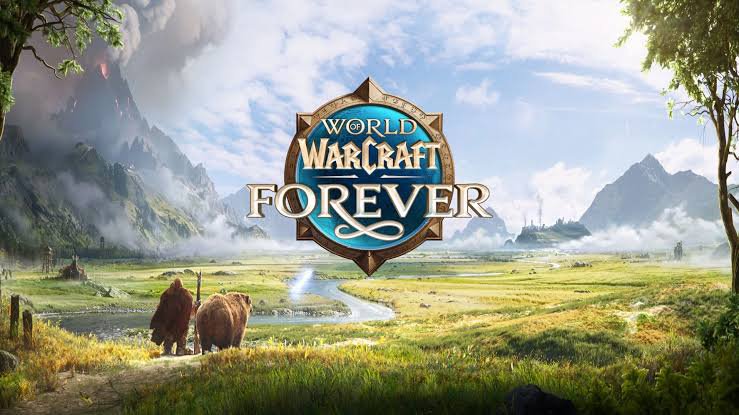
I can’t state enough how amazing the rush of enthusiasm was after the World of Warcraft: Forever reveal trailer was dropped on September 12th. It was a surprising and enlightening moment; from my distant place which hadn’t been keeping up with swirling ‘classic plus’ rumors, this announcement was fresh. I started watching the panels that also happened during Blizzcon 2026, and I found myself more and more sucked in.
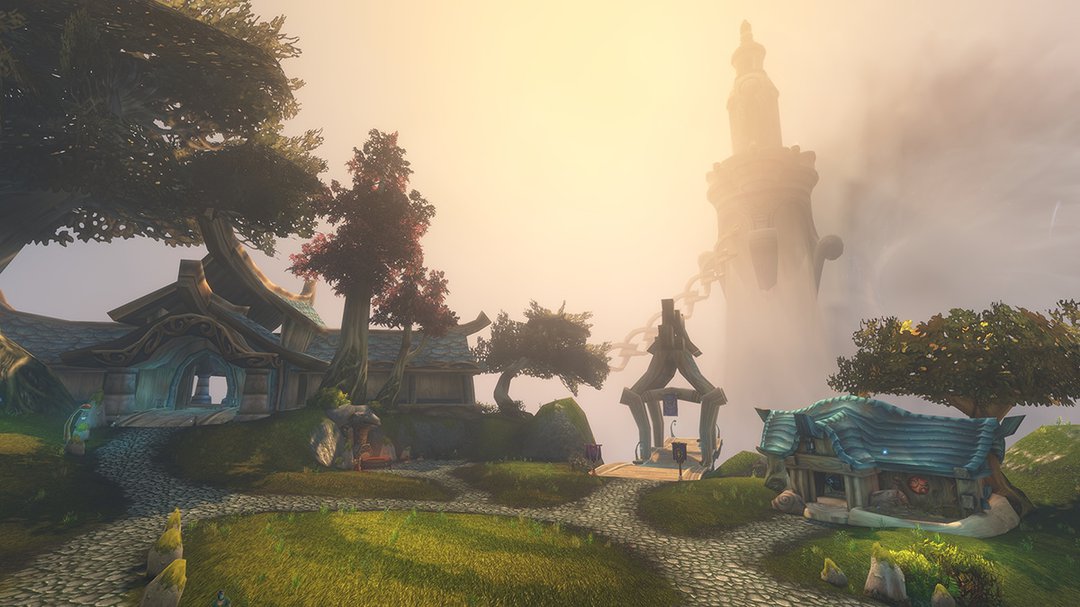
It is a surreal experience, seeing original graphics that could have come out back in 2004 merged alongside state of the art lighting and shadows.
The moment I knew I had to write this article was during the WoW: Forever Deep Dive panel. It was when Kris Zierhut started talking about combat and proudly said “fighting a monster should take on average fifteen seconds” and followed up with statements on how the game would punish those who try to rush through dungeons and zones to thunderous applause, I knew something felt different with this version of the game. I had been watching alongside Xaryu’s chat to get live reactions from people who were up to date in the WoW scene, and again, felt shocked to see such positive reactions. From my memories of 10+ years ago, players always wanted faster, quicker, flashier, brighter. It was always about the rush, it was always about who was first. When level boosts had been introduced to MMOs, they had felt antithetical to what the game was about, and now there were entire panels dedicated to ‘this game will be slower’ and preserving an original style?
I followed up with their panel “Evolving a Timeless World”, and knew I would be buying a month of WoW subscription for the first time in fifteen years. I highly recommend watching the whole panel; it’s an experience that shows some of the designers and devs out there truly love the world of Azeroth. It’s a play by play of them taking the classic zone of Duskwood and how they tried to keep older graphics while constantly upgrading lighting, shadows, fog, and as many environmental effects as they could cram in there.
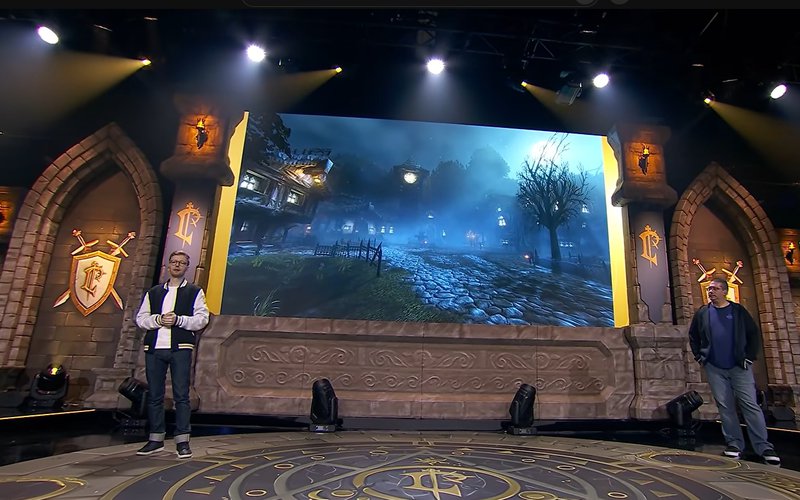
If you wanted one bit of final proof that this whole weekend felt surreal, it was when during the WoW Forever: What’s Next panel the lead Classic Designer Tim Jones said with his whole chest that there would be no flying mounts, and again, there was genuine excitement that rippled through the crowd. I still remember debating with players before The Burning Crusade was released that flying mounts might ruin immersion, but the rule of cool and the idea of giving more power to players was at the height of game design. Now, a lifetime later, restricting player agency is being seen as a good thing and getting people to sign up to play.
In summary so far, if you are reading this as someone who either
- Used to play WoW and wants to return to a world based on immersion
- Someone who enjoys slower paced games and wanted to go at their own pace
- Someone who has never played World of Warcraft but always wanted to jump in and not feel left behind
…This really does feel like the perfect moment to join. As someone who really did say “I loved my time with WoW but can never go back”, we’ve been planning a Sprites and Dice guild for the last few weeks and can’t wait to jump in on November 4th. There’s a good chance I’m going to enjoy playing to level 60 with a character and then slowly fade back away, but a chance to play through Azeroth again with friends and try out new dungeons for the first time? Magic.
Paratext And Problematic Reactionaries
I’ll try (and fail) to go fast here, as this is an article that’s hoping to focus on optimism and hope… but I feel like it has to be said. World of Warcraft can never go back to 2004 again. No matter how hard the devs try, no matter how earnest game designers work, there will be no way to perfectly recapture the perfect storm of magic that happened two decades ago. Why?
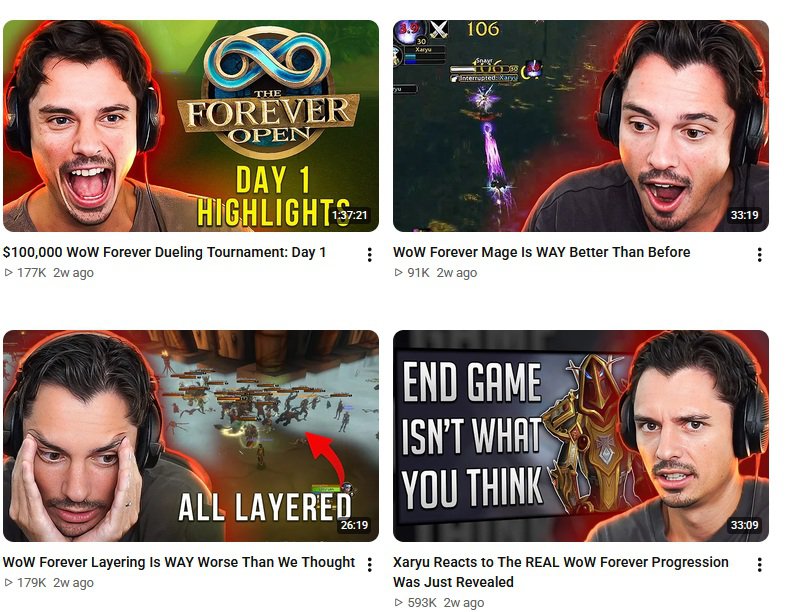
Well, after researching videos and panels for this article, here’s a recent snapshot of my youtube recommends page:
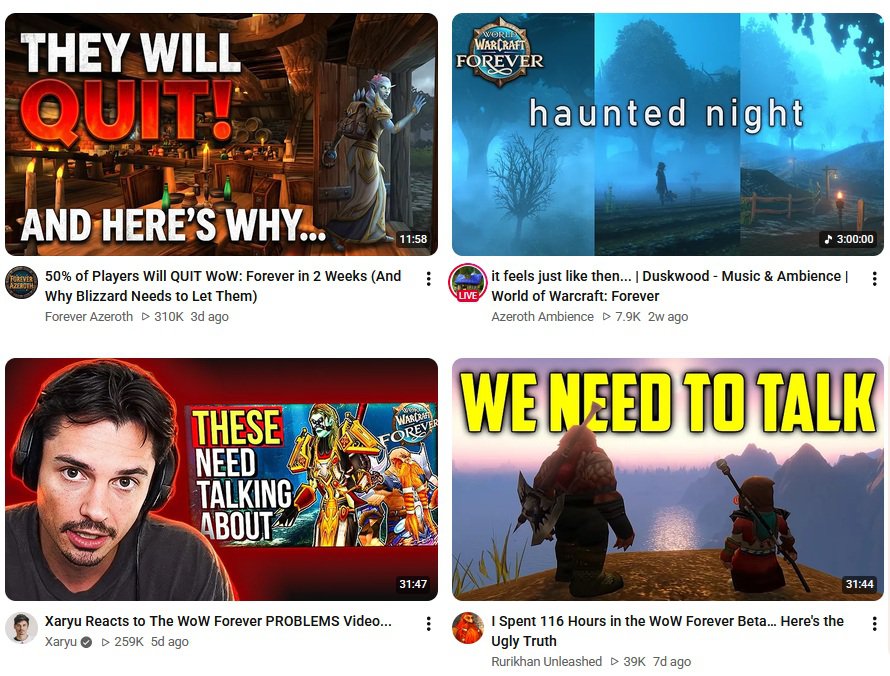
It’s just a constant wall of noise about WoW Forever. I purposefully avoided playing in the beta so I could play fresh on release day with friends, but a week into the beta being live, my social media suggestions was a constant list for ‘tips and tricks’ to optimize getting to the cap of level 20. There were daily updates as to which was the ‘worst’ class in the game, and which was ‘broken’ and unbeatable. Yes, I found a lot of joy and exuberance, but after a month, the enthusiasm was already mutating into ragebait and optimization debates. People spending hours posting about how the game was doomed or how the alliance or horde had already ‘won’, whatever that meant.
Now, I want to make clear that I don’t think criticism and commentary is bad. It’s just that the gaming culture of the 2020s is incredibly different than the early 2000s. YouTube did not exist until 2005 - World of Warcraft is older than YouTube. Wowhead, the website that worked to be a talent calculator and eventually a wiki for all stats and information for WoW, didn’t exist until 2006. This is a game that existed before streaming did.
I’m going to refer back to someone who summarized this better than myself. In a follow up video, Olson (who has never let his subscription expire since launch) talked about how the culture of WoW changed in Why It’s Rude To Suck at Warcraft. The thesis boils down to how Paratext - essentially, sources that talk about WoW that are not the game itself - informs how the game plays and is played. Back before Wowhead really took off, looking for strategies and tips on how to play were mostly confined to learning from other players inside of the game. Asking for tips in general chat (yes, even Barrens chat), was the best way to get a quick answer. Getting a voice chat ready for your raid wasn’t simple, requiring a lot of work to set up a Ventrillo or even Skype. If you looked up World of Warcraft on YouTube. Your first search results would most likely be Machinema, which were creative artistic expressions about the game, not how to play better. Yes, classic Leeroy Jenkins from 2005 counts.
Now in 2026, the landscape is dominated by gaming paratext that is centered around optimal play and determining which game is ‘winning’ or ‘losing’ through player counts. It was a slow and steady shift, and one that happened during WoW’s timeline. There was a point around the Cataclysm expansion where if I was playing the game and wanted to join a dungeon, people asked to see my talent tree to see if I was prepared. A raid would begin with a hyperlink to a ‘how to’ video. Professional guilds now screened to make sure you had appropriate add-ons installed so you would be able to beat bosses, even if those add-ons meant stripping away ambient music and special effects so you had better clarity to win.
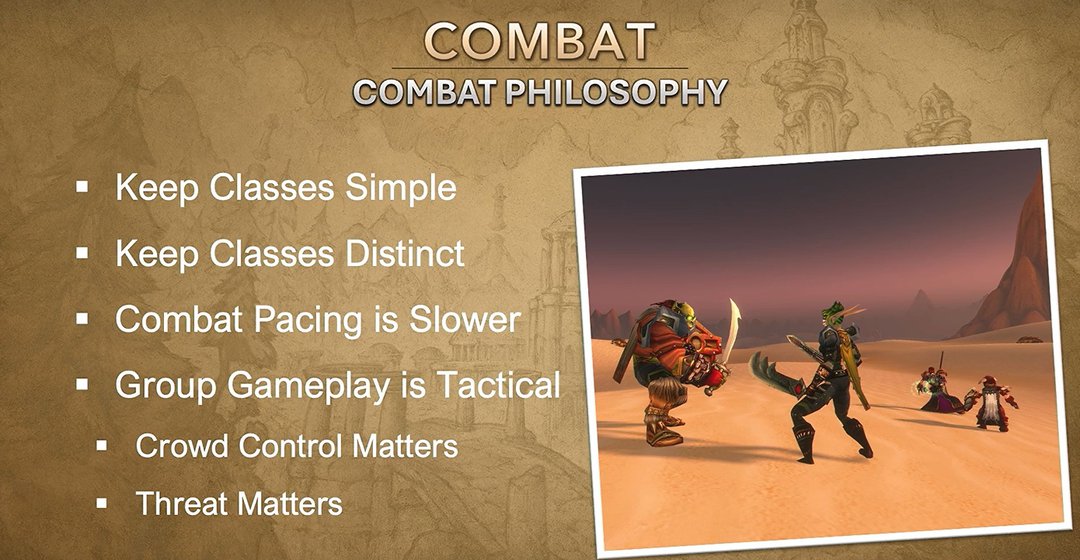
All of this seems great for many players, but will it matter if most people bring an 'must beat the game in the first 72 hours' attitude to this new version of the game?
The announcement of Forever was all about nostalgia and enjoying the journey. The fact that I’m seeing people constantly talking about how to optimize their play and which add ons you should install before the game even launches makes me recoil.
This is all before I get into the rage merchants, both those who do it accidentally and on purpose. Asmongold is low hanging fruit, and honestly, a topic I would like to skip. However, it is indicative of a common trend: streamers of a popular game that quickly become its biggest critics, which can create a dangerous cycle for the culture of a game.
As an example, I’ll refer to a review I did on one of my favorite multiplayer games: Void Crew. It’s an absolutely amazing game to play with friends on a space ship, but starts to run out of new content by 20-30 hours. It’s made by a small team and costs only about 24 bucks. For me, it’s amazing. I played once or twice a month with some friends for a few hours, and put it away again. Yes, playing it for 8 hours a day every day would be boring, but that’s not what the game is meant for; bursts of fun and laughs with friends. When I see steam reviews saying ‘not worth it’ when they have 100+ hours in the game logged, it makes me laugh.
However, streamer culture promotes and rewards streamers who spend 4-8 hours daily on the same day, day in and day out. Now, World of Warcraft is a game about immersion and is much bigger than many games, but daily play without breaks will mean constant contact. Small annoyances become grievances. Relatively minuscule issues of balance become unavoidable. You can have people who only play a game for a few hours a week genuinely worried that one class being 5% weaker than another class is detracting from their enjoyment from an otherwise enjoyable game.
If you were required to talk publicly about your favorite family member for 4 hours a day to other people, could you keep it positive 100% of the time? Would a casual reference to the things that annoy you slip in? Then, when you realize you get more laughs and reactions when you joke about the negatives instead of the positives… could you stop yourself from doing it over and over and over?
It’s already happening. I found this great clip of Xaryu early on pushing back against his viewers who were being too negative soon after Forever’s reveal. However, this streamer makes their money on constant content, which means you have to keep talking about the game, which is how you get to-
I want to make it clear that before September, I didn’t watch Xaryu or any streamer content about WoW. In some ways, I hope this article is sympathetic to how streamers get sucked into a cycle of negativity. At the same time, this trend already appearing during a month long beta before the game is out doesn’t bode well.
WoW: Forever is an attempt to reset the state of a 23 year old game to one that’s filled with wonder, excitement, and the passion of personal discovery. In the end, one of the big questions that this article is asking is simply if such a reset is possible. Can you turn back time to an earlier age? Well, when you have a scandal involving gold farming for a beta version of the game within a month of its announcement… I have my doubts.
A Game Design Shift Which Might Signal Real Game Design Change
World of Warcraft has truly always been a herald and harbinger of gaming culture. It existed before streaming and video walkthroughs of how to beat bosses. It was born when mods for games were celebrated for aesthetics, and slowly morphed into a way to optimize game play. The base game was one filled with wonder and required team learning to truly master. Now, on its 11th major expansion, you cannot log in without there being links to an in-game store for micro transactions, without there being daily quests and FOMO external incentives to stay logged in to ‘keep up’.
This is a game that existed before cell phones. I would finish my classes for the day, head back to my computer, and only then would the tavern music across Azeroth fill my mind, letting me vanish for a few hours into another place. Now, I can sit at my work computer and endlessly check and re-check talent trees, sneak video updates on my phone about which class is ‘winning’ or ‘losing’ in patch notes. By the time I get home and sit down to play after the kids go to sleep, am I going to approach this game with wonder, or like it’s another job I’m trying to get better at?
Yet, while part of me is pessimistic, I cannot help but be hopeful about the release of WoW: Forever. The advertising and design for this push feels deliberate and pointed. In the past, new expansions for this game always pushed for bigger, brighter, faster. Achievements were added for ‘world first’ and emphasized the rush. More reasons were given to make gameplay quicker, but also slowly wore away the fabric as to why you played this game with other people. Now, designers here are working to scale back to those designs with modern improvements.
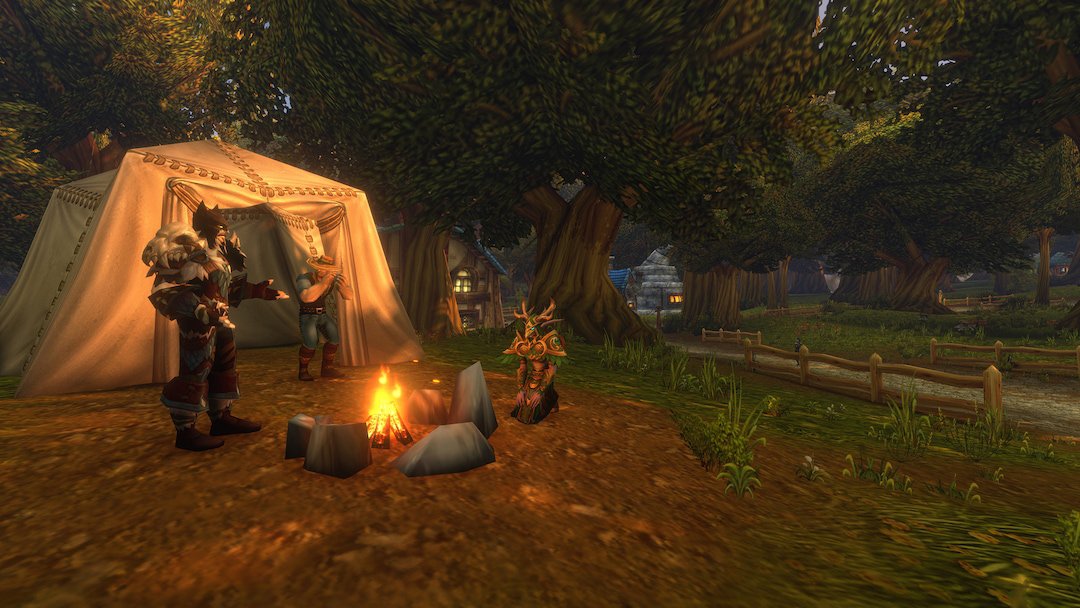
Camping is an attempt in Forever to merge form and function to rebuild immersion.
I’ll give a great example from the past and how it might apply to the WoW: Forever’s design. Years ago, in 2007, I had a friend who had me help her create a guild on the Feathermoon RP server. It would only have one member: Shaima, with the guild flag under her dubbing her <Flower Girl>. On lazy nights, she would sit in Stormwind near the bank, shouting out she had flowers for sale. Other players would legitimately try and click on her as if she was an NPC, but no, she was a player. They had to barter for flowers with her. She would learn their character’s backstory, what fights they were a part of. I remember her excitedly telling me with delight about how players who weren’t really into roleplay suddenly found themselves talking about how they were excited to explore a new zone, and what it meant to them.
This was a fun gimmick, a great and unique way to play in the sandbox that is World of Warcraft. Immersive, emergent gameplay. It ran its course however, partly because it was just meant to be for a little while, but also because the server was becoming more focused on raiding. It was morphing into optimization. New tools in the game let players teleport instantly to dungeons instead of needing to find flight paths or use mage portals. You didn’t have to wait in huge hubs or search for other players, but could just join a randomized queue the server provided.
This is the struggle of game design. It isn’t just about ‘making a good game’, but asking what kind of game do you want to make. Many games can have combat that is fun or has great art design, but part of the magic of MMORPGs when they were first created was how they brought people together to make community. How do you bring that back?
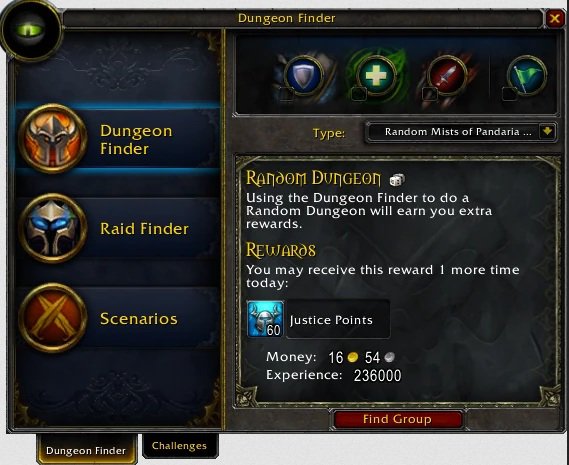
((Progress for ease of gameplay? Yes. Something that slowly tore away the need for players to communicate and work together? Also yes.))
Well, Forever designers have an idea for that: camping. Long story short, you can now create a base camp that if you sit down at for several seconds, gives you some lasting buffs. Nothing huge there, except that the more players who visit the camp and have different professions, the more benefits are handed out to everyone involved. This. Is. Perfect. PVE players have an incentive to pause for a short while and gather with other players. PVP players have this as well, as well as a chance to create fun moments where they can ambush a camp full of opponents for drama. RP players benefit too - I will absolutely be taking my drinking dwarf and passing out beer outside the deadmines and sharing stories with those who are waiting to group up to adventure together. Game design, functionality, and the chance to let players create something new within the world. It feels like a space where someone who just wants to be a flower seller can fit in again.
It would be easy to be cynical about what is going to happen on November 4th. WoW: Classic promised to be a return to the old days, but instead modern gamers brought modern gaming practices to an older version of the game, making it a race to the finish line. Here however, we have many, many panels and interviews with the design team laying out deliberate choices to marry older concepts with new solutions. The reactions from the fans and the crowds were enthusiastic and excited. We’ve had two decades of modern game design in the base game, and now, the pendulum really might be swinging back the other way.
A video I discovered from two years ago feels emblematic. Titled “I miss when WoW was just a game”, it really does summarize the feelings I’ve laid out in this article. The reaction to WoW: Forever is so big that it makes me not feel like a cranky old man talking about the good old days. It feels like we could be on a pivot point where game design tries to slow down instead of speed up, and that is a change I would absolutely be excited to see.
Can We Really Go Home Again?
I’ll wrap up with a little personal story that I think brings my thoughts full circle.
My friend Bill and I were talking about WoW Forever while driving home two weeks ago. We were friends in college clubs when found out we were actually mortal enemies in the old Tarren Mill/Hillsbrad wars that happened in 2004 and 2005; he was horde, I was alliance, we had probably blasted each other to pieces multiple times without any external reward or loot, but just because it was the thing to do. We lost track of each other after college only to reconnect as older, wiser, more tired adults, both with kids who really love trampoline parks. It gives us lots of time to talk about games. We often call ourselves the tired dads club along with others who remember logging into WoW for the first time, playing rounds of everything from Void Crew to Icarus to 7 Days To Die, recapturing some of that old social magic we got to experience back in 2004 for a few hours every few nights.
The conversation went something like this:
“I don’t know man - I don’t know if I even want to risk trying again.”
“Why not? It looks really good. We should play at the start. When it’s fresh and new and just experience the magic.”
“Yeah, I guess. But it really can’t be the same, you know? So much has changed. The people are different. The world is different.”
It’s this conversation that made me start writing up my thoughts. That push and pull between ‘remembering the good old days’, and knowing we aren’t still in college with more free time. Having the excitement to relive some past glories and camaraderie while also knowing our weekends are currently filled with swim lessons, laundry, reading practice and birthday parties. Me and the Tired Dads Club spent the last few weeks alternating topics between the price of a kid’s sneakers and happily recounting our favorite moments dying horribly in Molten Core or Karazhan.
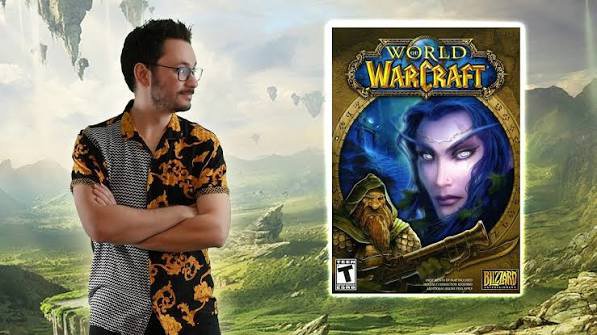
In the writing of this article, I found videos like this by Gday99, where a new player tries classic or older World of Warcraft content and falls in love with it as it stands on its own merits. If you've ever enjoyed this game, don't let people who talk about how its ruined now convince you the game was never fun for you.
We remember how there was wonder and excitement for the original release and for those first few expansions, but we also recognize that those times were before the Iphone existed and before any of us had social media at all. Our first time in a dungeon often felt like we were the first, with maybe one party member trying desperately to explain boss mechanics over ventrillo with no guides or add ons. We haven’t just gotten older; the daily pace and tempo of life has fundamentally changed.
Yet, while it would be so easy to just throw hands in the air and say ‘the golden days are over’, that sort of feels like the coward's way out, doesn’t it? World of Warcraft is being marketed not just on nostalgia, but in deliberate game design towards slower, more intentional play. This is a deliberate choice, and while you could sit there and nitpick, you can log into YouTube and watch fifty videos and spend 100 hours figuring out the meta and which class is best. You can get embroiled in online debates deciding if Blizzard’s newest take on transmogs is going to ruin the game… you could just not do that too. You have free will.
Instead, you can choose to just log in on November 4th, make a new character with some other friends, and go leveling up together. Go start one of those new campfires and shout at people to come join you for an ale and free buffs while you read your quest log and enjoy the journey. You can choose to not play for maximum levels and not feed the trolls by avoiding watching every piece of content creator drama. You can visit the Barrens, find a nice vantage point, and appreciate all those awesome new environmental effects while just hanging out with old guildmates and new friends, asking how their day was. People can make their own heaven or hell with the help of those around them, and that goes for digital worlds as well.
Bill and I were talking again this week as one of our kid’s birthday parties were wrapping up, the seven year olds absolutely delighted to be having cheap pizza and glittery cake, running around grinning ear to ear as they made up games and played tag in tunnel mazes that neither I or Bill can now fit in without our knees hurting. They were having the time of their lives. I felt echoes of that joy, remembering once being that size and that carefree, getting lost in a world all my own.
“I still don’t know if we can ever really go home,” Bill said again, slowly turning to smirk at me. “But I think we can visit. At least for a little while.”
